PCIe 5.0Current range
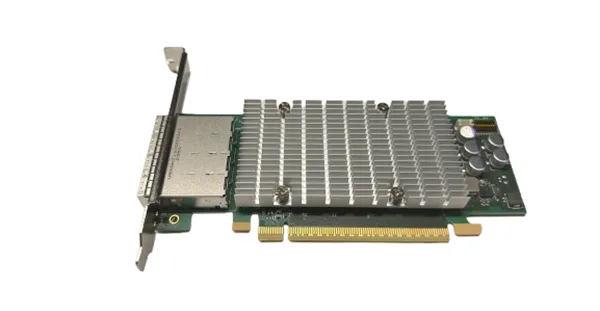
SFF-8614 host & target adapters
Cabled x16 PCIe 5.0 connection for transparent expansion or NTB-based system interconnect, according to adapter configuration.
MXH530MXH532
View adapters →PCIe adapters, switches, chassis, modular interconnects and software for extending device capacity and building high-bandwidth data paths across hosts and chassis.
Start with the PCIe generation and form factor, then select transparent expansion or non-transparent fabric operation. Product availability, connector type, lane width and operating-system support depend on the selected model.
Gen5 products serve the highest-bandwidth host/target, CDFP copper-link and expansion requirements. Options marked for consultation require configuration and availability confirmation.
Cabled x16 PCIe 5.0 connection for transparent expansion or NTB-based system interconnect, according to adapter configuration.
High-density cabled PCIe 5.0 adapters for x16 host/target links using the CDFP CopprLink interface.
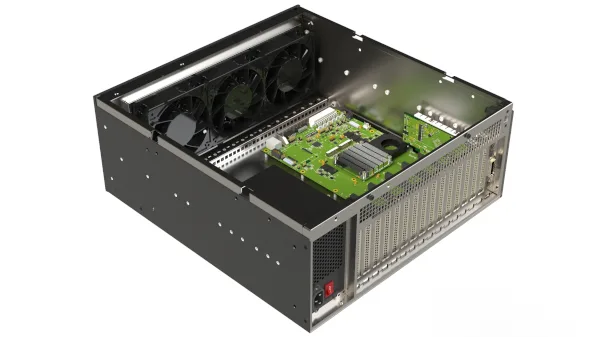
FireFly optical adapters, external switching and the MXB585-based eBox 5 platform are configuration options subject to current availability.
Gen4 families cover copper and optical host/target adapters plus multi-port external switching for transparent and NTB fabric topologies.
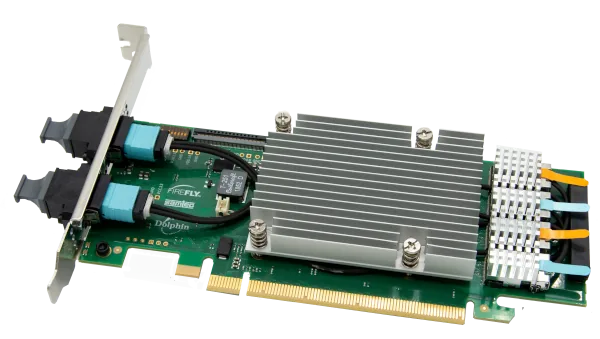
Optically isolated host/target links for remote PCIe resources where reach, cable density or electrical separation is required.
Single-, dual- and quad-connector adapter variants provide a practical route from compact links to full x16 cabled bandwidth.
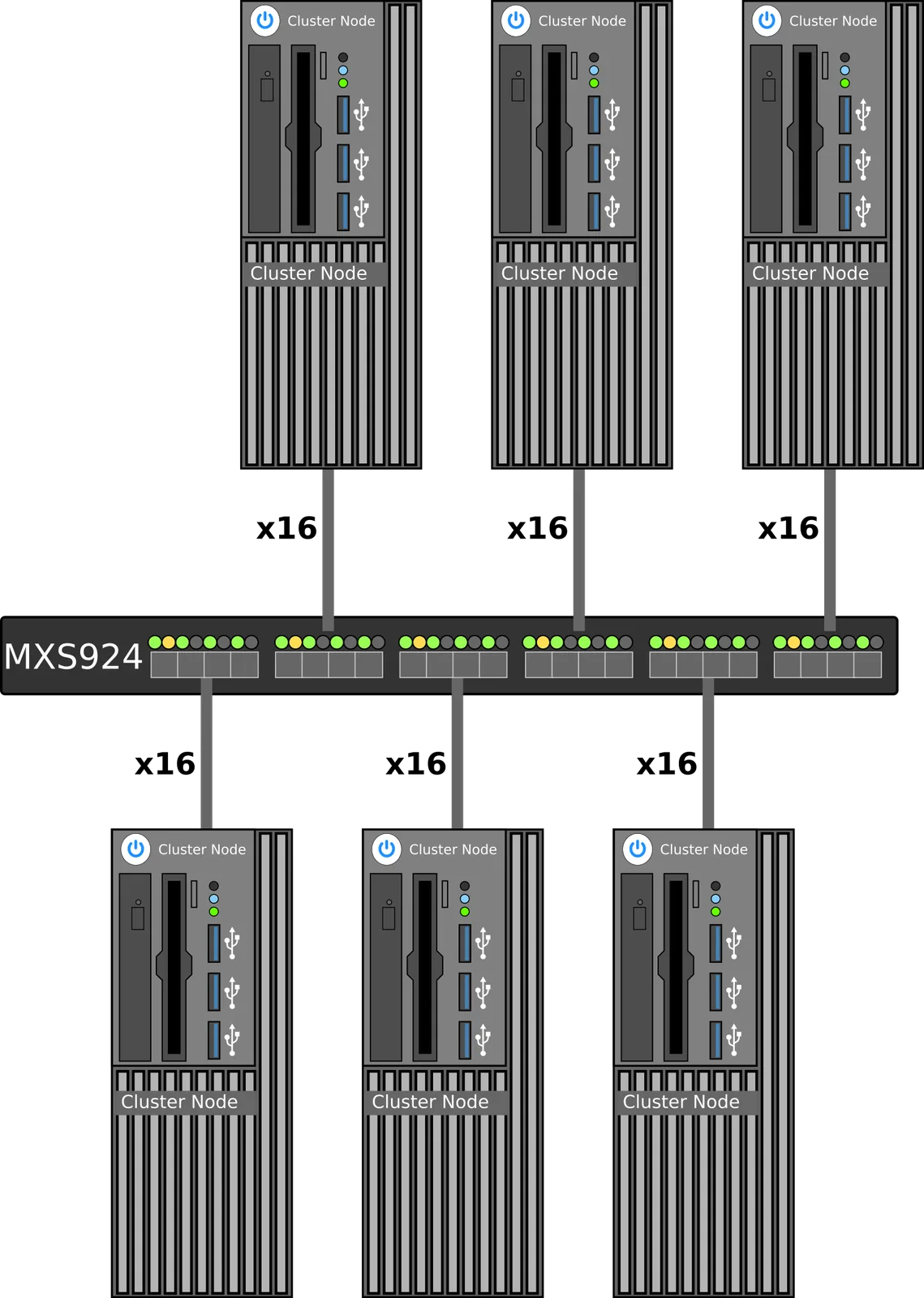
Multi-port switching for larger expansion trees and multi-host PCIe fabrics, with topology and partitioning defined during system design.
Established Gen3 and Gen4/Gen3 hybrid hardware remains relevant for XMC, compact platforms, legacy integration and mixed-generation systems.
Select half-height, XMC and optical variants where mechanical format and installed system generation govern the interconnect.
Proven x16 host/target adapters and external switching support transparent I/O trees and non-transparent multi-computer fabrics.
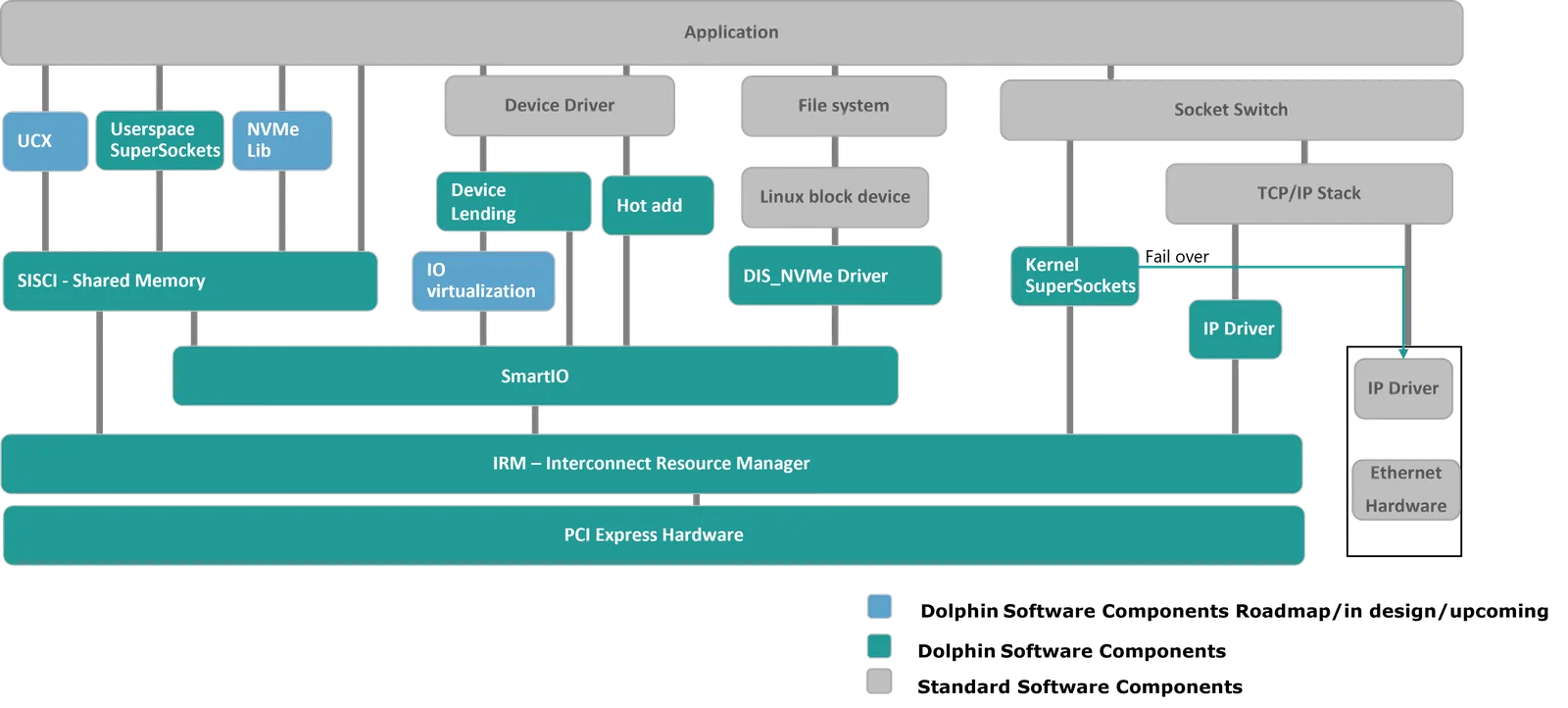
OpenVPX is a supported system solution using licensed eXpressWare and selected Curtiss-Wright hardware—not a separate Dolphin adapter generation.
Modular-system interfaces connect controllers, chassis and external computers. Select the role—host, target or system switch—before selecting the model.
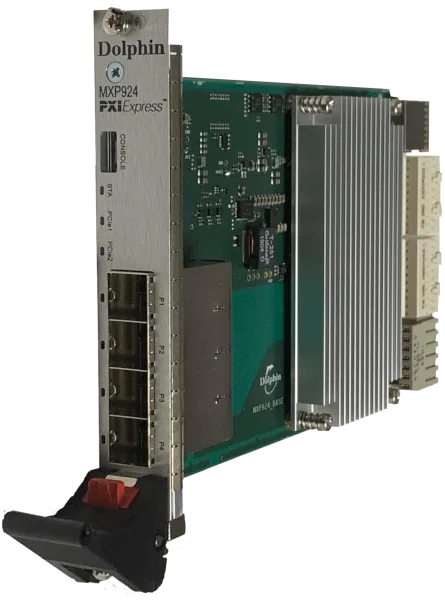
Link PXIe chassis to external hosts or to other chassis while preserving the required controller ownership and PCIe topology.
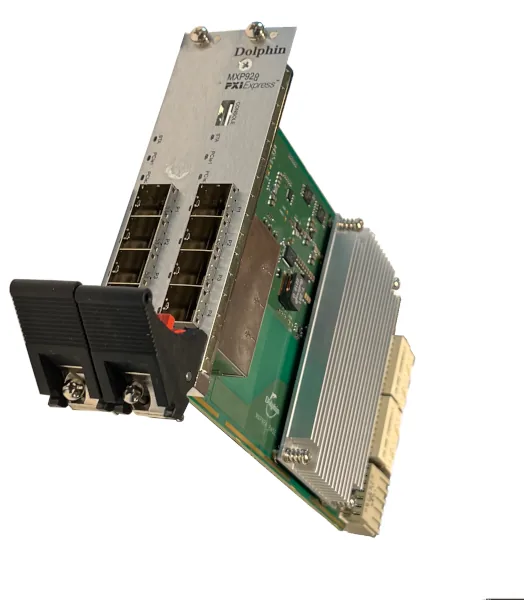
Select Gen5 PXIe host, target and switching modules according to chassis compatibility, firmware and software support.
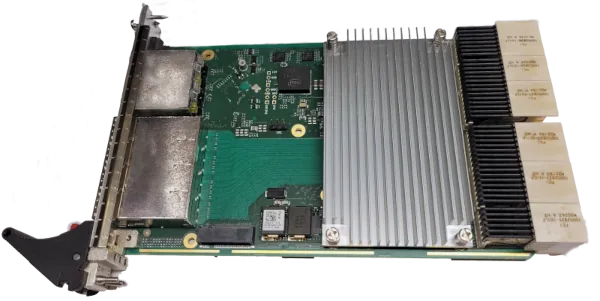
PCIe fabric interfaces for CompactPCI Serial systems, with generation, role and availability selected for the deployed chassis.
Complete the architecture with powered expansion, passive fan-out and connector-matched copper or optical media. Reach is interface-specific and must be qualified as part of the complete link.
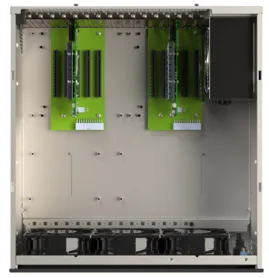
Provide powered, cooled PCIe slots for remote GPUs, accelerators, acquisition cards and storage devices.
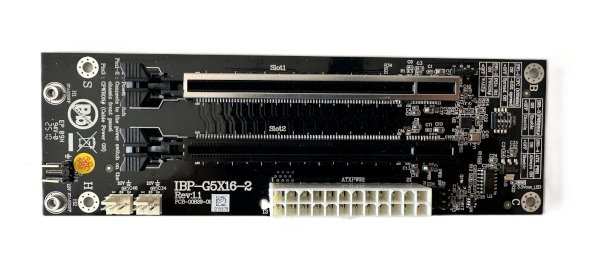
Fan one x16 upstream link into downstream slot arrangements for compact custom expansion systems.
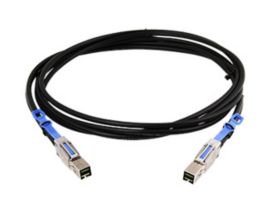
Choose SFF-8614, SFF-8644, CDFP CopprLink or FireFly optical media that matches both adapters and the required distance.
Software is required for NTB-based multi-computer fabrics and advanced resource sharing; ordinary transparent expansion generally retains the endpoint’s native driver model.
Remote memory access, DMA, interrupts, multicast/reflective memory and peer-to-peer programming interfaces.
View SISCI route →Socket-compatible acceleration and IP networking over supported Dolphin PCIe fabrics.
View networking route →Licensed Linux-oriented mechanisms for accessing or assigning PCIe devices across a configured fabric.
View device-access route →Open the original Dolphin or Dolphin-partner paper directly as a PDF. Each reference is placed against the design decision it supports; model availability and current software compatibility must still be checked separately.
Explains transparent and NTB topologies, optical reach, embedded clustering and the boundary between single-root and multi-host PCIe systems.
Open PDF ↗Use when an expansion chassis or endpoint must become available after host boot without restarting the Linux system.
Open PDF ↗Covers remote PCIe-device assignment, native-driver access and the architectural considerations behind shared or borrowed devices.
Open PDF ↗Describes software-defined reflective memory over a switched PCIe fabric and the role of SISCI multicast.
Open PDF ↗Use when GPUs, FPGAs, acquisition devices or other endpoints need direct transfers without staging all payload data through host memory.
Open PDF ↗Two-part Curtiss-Wright and Dolphin treatment of PCIe fabric communication, latency and implementation in VPX systems.
Select the ownership model first, then the data path and software layer. These patterns map common PCIe system goals to the architecture that should be qualified before adapters, switches and cables are selected.
Extend native PCIe endpoints beyond the host enclosure while keeping one root complex, one hierarchy and the endpoint's supported driver model.
Explore →Connect independent computers through NTB, then select SISCI shared-memory operations, SuperSockets or IPoPCIe for the required application interface.
Explore →Replicate application-defined memory regions through SISCI broadcast segments and a supported multicast-capable PCIe fabric.
Explore →Move data directly between compatible DAQ, FPGA, GPU, NIC or NVMe endpoints where the full route supports peer transactions.
Explore →Scale PXIe slots and processing through either one transparent hierarchy or independent NTB domains, with timing and triggers engineered separately.
Explore →Access compatible remote PCIe devices through exclusive Device Lending with native Linux drivers or application-managed SISCI SmartIO.
Explore →PCIe generation and lane width alone do not establish compatibility. Confirm enumeration, address-window resources, peer-to-peer routing, ACS and IOMMU policy, operating-system and driver support, reset behaviour, cable topology and the required failure-recovery model for the complete path.
The available products support several system approaches, from transparent device expansion to independent-host communication and direct device data paths.
Connect more devices, slots or modular chassis when the host platform alone is insufficient.
Retain compatible PCIe drivers, endpoint behaviour and DMA where the selected topology supports them.
Use NTB hardware and fabric software to exchange data between separate computers without merging their root complexes.
Select shared memory, sockets, IP, multicast or peer-to-peer transfers according to the application and supported hardware.
Dolphin Interconnect Solutions combines PCIe adapters, switches, modular-system interfaces and software for transparent I/O expansion, NTB communication and managed PCIe fabrics.
Transparent host and target adapters extend a root complex to compatible remote endpoints. Driver, BAR allocation, reset, hot-plug and peer-to-peer behaviour must be validated through the complete topology.
Non-transparent bridging keeps root complexes independent while enabling translated memory windows, DMA and interrupts. Switches add fan-out, multi-host and modular-system topologies.
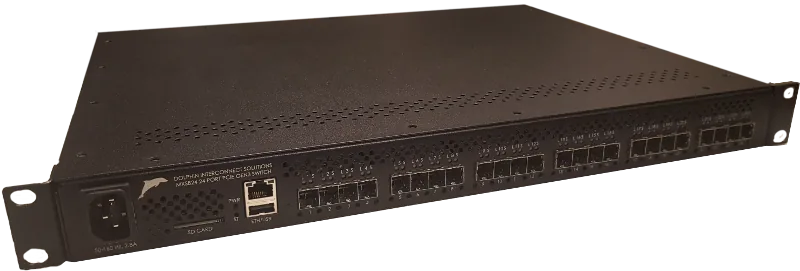
Supported software components include SISCI, SuperSockets, IPoPCIe, reflective memory and SmartIO or device lending. Availability depends on the hardware family, operating system and license.
Current product families span PCIe Gen3, Gen4 and Gen5 adapters, PXIe and CompactPCI Serial modules, external switches and expansion systems. Model-specific links use SFF-8614, SFF-8644, CDFP CopprLink or FireFly optical interfaces; supported cable reach ranges from short passive-copper links to optical configurations of up to 200 metres.
PCIe interconnect is used where endpoint bandwidth, latency, native driver access or system scalability is a primary design constraint.
Increase accelerator and storage capacity while reducing data movement between compute, FPGA, GPU and NVMe stages.
Scale instruments and acquisition across chassis without replacing the complete controller and software environment.
Connect HIL, simulation, logging and accelerator platforms for high-rate validation workflows with defined latency and bandwidth.
Create direct camera, FPGA, GPU and storage pipelines that reduce host-copy overhead and processing delay.
Expand instrumentation and move device data efficiently into processing and storage for characterization and production test.
Build modular multi-node processing and remote-I/O systems with controlled ownership, isolation and deterministic data paths.